
4Cs - Diamond Color, Clarity, Cut, and Carat Weight - Update
4Cs
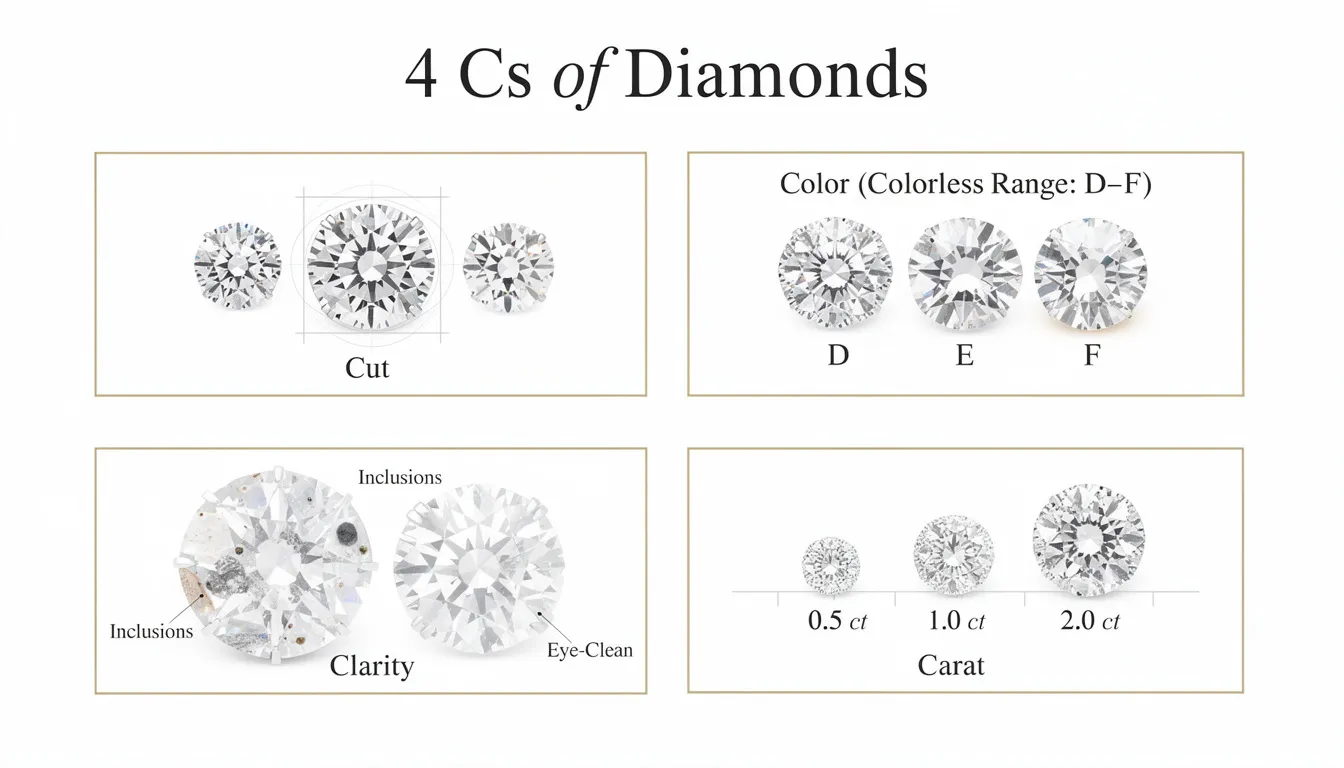
4Cs Diamond Color, Clarity, Cut and Carat Weight are collectively termed the 4Cs – the factors that, when combined, define a diamond's quality and ultimately determine its value. GIA created the 4Cs of Diamond Quality
Color
GIA's diamond color grading system measures the absence of color, starting with D as colorless and continuing to Z representing light yellow or brown. The distinctions between color grades are so subtle that they are often invisible to the untrained eye but can make a big difference in diamond quality and price.
Cut
A diamond's cut determines its sparkle. To fashion a stone with proportions, symmetry and polish worthy of an excellent cut grade requires artistry and workmanship. The finer the cut quality, the more sparkle the diamond has.
Clarity
Natural diamonds form from carbon exposed to tremendous heat and pressure deep in the earth. Diamonds often contain clarity characteristics, called inclusions or blemishes. Inclusions are enclosed within the gem and blemishes are on the surface of the diamond. If all else is equal, the closer a diamond is to flawless, with no inclusions or blemishes, the higher its value.
Carat Weight
Diamond weight is measured in carats. One carat is equal to 0.2 gram, about as heavy as a paperclip. Since larger diamonds are more rare, they will cost more than a smaller gem with the same color, clarity and cut grades.
GIA Grading Report
The GIA Diamond Grading Report includes an assessment of a diamond's 4Cs – Color, Clarity, Cut and Carat Weight – along with a plotted diagram of its clarity characteristics and a graphic representation of the diamond's proportions. GIA Diamond Dossier® includes these without the graphical representation of the clarity characteristics. The GIA laboratory issues diamond grading reports for loose, natural diamonds in the D-to-Z color range that weigh 0.15 carats or more.
Understanding the 4Cs of Diamonds
The diamond clarity chart is a standardised scale used to measure the purity of a diamond by assessing internal inclusions and surface blemishes under 10x magnification. Understanding diamond clarity and the diamond grading process is essential when evaluating a diamond's overall quality and brilliance. When you buy diamonds—whether loose diamonds or natural diamonds—it's important to choose a reputable source to ensure authenticity and ethical standards.
At AG & CO Jewellery, we offer engagement rings crafted with responsibly sourced materials and lab-grown gemstones, providing sustainable and ethical options for your special piece. Our collection features a wide variety of diamond shapes, including round, oval, pear, marquise, emerald, and cushion cuts. Comparing these diamond shapes and cuts can help you make a decision that best suits your style and preferences.
Custom engagement rings allow for complete personalization in design, settings, and materials, and can be designed to pair seamlessly with your wedding band. Our skilled jewelers are here to assist you from your first consultation, offering expert guidance and support throughout the entire buying process. We proudly serve customers across Australia with nationwide shipping, and also deliver our fine jewellery to clients around the world.
In addition to engagement rings, we offer a curated selection of wedding rings and wedding bands, helping you choose complementary pieces that celebrate your unique love story.
1. Choosing the perfect diamond engagement ring
-
Consider the diamond's cut first, as it determines the sparkle and brilliance of the stone.
-
Evaluate the diamond's color grade, aiming for near-colorless stones (D-F) for maximum beauty.
-
Understand carat weight and how it affects the size and price of the diamond.
-
Review the diamond clarity grade to find a balance between appearance and value, with VS2 or SI1 often offering the best "eye-clean" options.
-
Choose a diamond shape that complements personal style and finger shape, such as round, oval, pear, emerald, or cushion cuts.
-
Decide on the precious metal for the setting, including options like yellow gold, white gold, or platinum, to suit personal taste and lifestyle.
-
Opt for certified diamonds from reputable sources to ensure authenticity and ethical standards.
-
Consider custom engagement rings for a unique design that reflects your love story and personal style.
-
Factor in the setting style, whether solitaire, halo, three-stone, or vintage-inspired, to enhance the diamond's beauty and suit your preference.
-
Seek guidance from diamond experts and jewellers during your first consultation to make an informed decision.
2. Understanding carat weight in diamonds
The diamond clarity chart is a standardized scale used to measure the purity of a diamond by assessing internal inclusions and surface blemishes under 10x magnification. This chart helps buyers and jewellers evaluate the overall quality and brilliance of a diamond, ensuring transparency and consistency in grading.
Clarity grades are determined by the number, size, and position of inclusions and blemishes. The main clarity grades include: FL (Flawless), which means no inclusions or blemishes are visible under 10x magnification; IF (Internally Flawless), which means no internal inclusions and only minute surface blemishes; VVS (Very, Very Slightly Included), where inclusions are extremely difficult to see; VS (Very Slightly Included), with minor inclusions visible under magnification; SI (Slightly Included), where inclusions are noticeable under 10x magnification; and I (Imperfect), which have obvious inclusions that may affect transparency and brilliance. Diamond inclusions are internal flaws that can affect clarity, and the lower the clarity grade, the cloudier the diamond will appear.
Higher clarity grades, such as Flawless and Internally Flawless, are exceptionally rare and command the highest prices due to their pristine nature. Value is significantly influenced by rarity, with Flawless diamonds being the most expensive, while lower clarity grades like SI and I are more common and affordable. For example, an IF diamond can be two to three times more expensive than a VS1 diamond of the same size, and for a 1-carat diamond, there can be a price drop of 15% to 30% between SI1 and SI2. "Eye-clean" stones, usually VS2 or higher, provide the best value as they appear flawless to the naked eye, making VS2 or SI1 popular choices for buyers seeking a balance of value and appearance.
High-clarity diamonds (VVS or better) allow light to pass through with minimal obstruction, maximizing sparkle and brilliance. In contrast, a diamond with a poor clarity grade has multiple inclusions, which directly affects its sparkle. The impact of clarity is also influenced by cut; step-cut diamonds like Emerald or Asscher, with their large facets, make inclusions more noticeable and often require a higher clarity grade of VS1 or better. Tiffany's strict diamond grading standards ensure that any diamond with noticeable imperfections to the unaided eye is rejected, maintaining their reputation for expertise, integrity, and accuracy.
In addition to clarity, colour is another key factor in diamond quality. Colour refers to the natural tint inherent in white diamonds, and colour grading plays a significant role in the overall assessment of a diamond's appearance and value.
At AG & CO Jewellery, every engagement ring is crafted with meticulous attention to detail, from the selection of high-clarity stones to the final polish. This commitment to detail and a perfect polish ensures each piece is finished to the highest standard, enhancing both the beauty and uniqueness of our jewellery.
3. The importance of diamond clarity
When you buy diamonds, it's important to consult with diamond experts who can guide you through the process and help you select from a wide range of certified loose diamonds. At AG & CO Jewellery, we offer both online and in-person consultations across Australia, ensuring you have access to the best advice and the highest quality stones for your custom jewelry.
Our collection features a variety of settings and gemstones, including lab-grown options like sapphires and moissanites, as well as fancy color stones such as yellow diamonds. Whether you're designing a bespoke engagement ring or selecting from our curated range, you can choose from an array of gemstone shapes and personalized setting options to create a truly unique piece.
Men's engagement rings are becoming increasingly popular, and we offer a diverse selection of styles to suit every taste and preference. No matter your choice, we ensure a comfortable fit for everyday wear, with complimentary resizing and custom fitting services available to guarantee your ring sits perfectly on your finger.
Finding the perfect diamond is all about personal preference, style, and proportion. Custom engagement rings allow you to personalize every detail, from the diamond and gemstones to the setting and precious metal—choose from gold, platinum, and more. Our expert craftsmen pay close attention to polish and detail, ensuring a high-quality finish that reflects the unique beauty of your relationship.
4. Matching your ring to your personal style
Diamond grading is a crucial part of selecting the perfect engagement ring, as it ensures each diamond’s clarity, cut, and overall quality are accurately assessed and certified. At AG & CO Jewellery, our diamond experts and jewellers are here to assist you throughout the entire process—from understanding the diamond clarity chart to choosing, customising, and caring for your ring. We are committed to providing expert guidance and personalised support to help you make an informed decision.
Our services and products are available to customers across the world, with global shipping ensuring accessibility and convenience no matter your location.
All AG & CO engagement rings are crafted using responsibly sourced materials and lab-grown gemstones, reflecting our dedication to ethical practices and sustainability. We also offer a wide selection of wedding rings and wedding bands, designed to complement your engagement ring in both style and fit. Our team can assist you in selecting or customising a wedding band that pairs seamlessly with your chosen engagement ring.
To maintain the brilliance and beauty of your engagement ring, we recommend regular cleaning and proper care. This helps preserve the sparkle and ensures your ring remains a cherished symbol for years to come.
Diamond Care and Maintenance
A diamond engagement ring is more than just a piece of jewellery—it’s a symbol of your love story and commitment. To ensure your diamond ring continues to reflect its original brilliance and beauty, regular care and maintenance are essential. Here are some expert tips to help you keep your diamond engagement ring sparkling for a lifetime:
-
Avoid Harsh Chemicals: Exposure to harsh chemicals like bleach or acids can damage both the precious metals—such as yellow gold, white gold, or platinum—and the diamond itself. Always remove your ring before using cleaning products or swimming in chlorinated pools.
-
Safe Storage: When your diamond ring isn’t being worn, store it in a soft, dry place, ideally in a fabric-lined jewellery box or pouch. This helps prevent scratches and keeps your diamond and metal setting in pristine condition.
-
Gentle Cleaning: To maintain your diamond’s brilliance, clean your ring regularly with mild soap and warm water. Use a soft brush to gently remove any dirt or residue, and dry it with a lint-free cloth to avoid water spots.
-
Mindful Wearing: Take off your engagement ring during activities that could cause damage, such as gardening, sports, or heavy lifting. This helps protect both the stone and the setting from accidental knocks or scratches.
-
Professional Check-ups: Schedule a professional cleaning and inspection with a trusted jeweller every 6-12 months. Diamond experts can check for loose stones, worn prongs, and ensure your ring’s overall appearance and quality remain flawless.
The clarity grade of your diamond can also influence how you care for it. While most diamonds are durable, those with a lower clarity grade may have inclusions that make them slightly more susceptible to damage. However, with attentive care, even a slightly included diamond can maintain its sparkle and value, looking flawless to the naked eye.
When selecting the perfect engagement ring, consider your personal style and that of your partner. Think about which precious metal—yellow gold, white gold, or platinum—best suits your taste, and explore popular shapes like round, oval, emerald, or pear. Certified diamonds, such as those graded by IGI or GIA, offer assurance of quality and authenticity, making them a smart choice for your diamond engagement.
The setting and overall appearance of your ring are just as important as the stone itself. A three-stone design can add elegance and meaning, while a classic solitaire or a modern halo setting might better reflect your unique style. Men’s engagement rings are also gaining popularity, offering a range of styles and metals to suit every personal preference.
Ultimately, the right choice comes down to what feels most meaningful and comfortable for you. By considering factors like diamond cut, carat weight, clarity, and setting, you can create a diamond engagement ring that truly reflects your love and commitment. With proper care and maintenance, your ring will continue to shine—an enduring reminder of your special bond, crafted to last a lifetime.
What the 4Cs Mean for Diamond Quality
The 4Cs
are the global standard used to judge diamond quality: color, clarity, cut, and carat weight. Together, they help buyers understand what makes one diamond different from another, even when two stones look similar at first glance. Each C affects the diamond’s appearance, brilliance, and price in a different way. Learning how the 4Cs work gives you a clear way to compare options and choose a diamond that matches your style and budget. Whether you are shopping for an engagement ring or another fine piece, the 4Cs make the buying process simpler and more informed.
Diamond Color: From Colorless to Noticeable Tint
Diamond color measures how much natural tint a stone has, with the most valued diamonds appearing nearly colorless. The grading scale typically ranges from D, which is colorless, to Z, which shows a stronger yellow or brown tint. Small changes in color can affect both beauty and price, especially in larger stones where tint is easier to see. Many buyers prefer near-colorless diamonds because they offer a bright look at a more affordable price than the top color grades. When choosing a diamond, consider how the color grade works with the setting, metal type, and overall look you want for the finished piece.
Clarity and Cut: Beauty You Can See
Clarity refers to the tiny natural marks, called inclusions and blemishes, that form during a diamond’s creation. Most are microscopic and do not affect a diamond’s sparkle unless they are large or placed in a visible area. Cut, however, is one of the most important factors because it controls how well a diamond reflects light. A well-cut diamond can look brighter, livelier, and more brilliant, even if its color or clarity is not the highest grade. Many experts believe cut has the biggest impact on a diamond’s overall beauty, making it a key factor to review carefully before making a final choice.
Carat Weight and Smart Diamond Buying
Carat weight tells you how much a diamond weighs, not just how large it appears. Two diamonds can have the same carat weight but look different in size depending on their cut and shape. Bigger diamonds are often more expensive, but size alone does not guarantee beauty. A balanced diamond with a strong cut and good color or clarity may look better than a larger stone with weaker grading. The best choice depends on your priorities, whether that is maximizing sparkle, visual size, or overall value. Understanding all four factors helps you make a smart purchase and select a diamond that feels right for you.
What the 4Cs Mean for Diamond Quality
The 4Cs
are the global standard used to judge diamond quality: color, clarity, cut, and carat weight. Together, they help buyers understand what makes one diamond different from another, even when two stones look similar at first glance. Each C affects the diamond’s appearance, brilliance, and price in a different way. Learning how the 4Cs work gives you a clear way to compare options and choose a diamond that matches your style and budget. Whether you are shopping for an engagement ring or another fine piece, the 4Cs make the buying process simpler and more informed.
Diamond Color: From Colorless to Noticeable Tint
Diamond color measures how much natural tint a stone has, with the most valued diamonds appearing nearly colorless. The grading scale typically ranges from D, which is colorless, to Z, which shows a stronger yellow or brown tint. Small changes in color can affect both beauty and price, especially in larger stones where tint is easier to see. Many buyers prefer near-colorless diamonds because they offer a bright look at a more affordable price than the top color grades. When choosing a diamond, consider how the color grade works with the setting, metal type, and overall look you want for the finished piece.
Clarity and Cut: Beauty You Can See
Clarity refers to the tiny natural marks, called inclusions and blemishes, that form during a diamond’s creation. Most are microscopic and do not affect a diamond’s sparkle unless they are large or placed in a visible area. Cut, however, is one of the most important factors because it controls how well a diamond reflects light. A well-cut diamond can look brighter, livelier, and more brilliant, even if its color or clarity is not the highest grade. Many experts believe cut has the biggest impact on a diamond’s overall beauty, making it a key factor to review carefully before making a final choice.
Carat Weight and Smart Diamond Buying
Carat weight tells you how much a diamond weighs, not just how large it appears. Two diamonds can have the same carat weight but look different in size depending on their cut and shape. Bigger diamonds are often more expensive, but size alone does not guarantee beauty. A balanced diamond with a strong cut and good color or clarity may look better than a larger stone with weaker grading. The best choice depends on your priorities, whether that is maximizing sparkle, visual size, or overall value. Understanding all four factors helps you make a smart purchase and select a diamond that feels right for you.